

Struggling with constant delay? Learn how to overcome procrastination by understanding its root causes and applying 7 practical strategies. Break the cycle of stress and unlock your productivity today
If you’re looking for ways to overcome procrastination and finally break the cycle, you’re not alone.. Procrastination is a prevalent behavior that affects people from all areas of life, resulting in a wide range of negative implications ranging from missed deadlines to strained relationships to damaged mental health. However, the good news is that you can overcome procrastination and permanently break the cycle. You may increase your productivity, achieve your objectives, and enhance your general well-being by learning effective tactics and cultivating a positive mentality.
In this article, we’ll look at how to overcome procrastination once and for all, as well as why it’s so important for personal growth and success. So, if you’re ready to take control of your life and stop procrastinating, keep reading to learn how to break the cycle of procrastination.
Understanding Procrastination
Before we can start overcoming procrastination, we need to understand what it is and why it happens. Procrastination is the act of delaying or postponing a task or activity, usually to the last minute or beyond the deadline. It’s a common behavior that affects people of all ages and backgrounds, and it can have significant negative impacts on personal growth, productivity, and well-being.
There are many reasons why people procrastinate, and they often vary depending on the person and the situation. Some common causes of procrastination include fear of failure or success, lack of motivation or discipline, perfectionism, lack of clarity or direction, poor time management skills, and overwhelm. Procrastination can also be a learned behavior, meaning that we may have picked it up from our surroundings or past experiences.
There are different types of procrastination behaviors, such as avoiding, delaying, or distracting oneself from the task at hand. Some people may also engage in “productive procrastination,” where they do other tasks instead of the main one, or “creative procrastination,” where they use the time to generate ideas or inspiration.
By identifying your own patterns and triggers, you can develop a personalized approach to tackle procrastination and improve your productivity and well-being.
But, before we get into how to overcome procrastination, let’s first understand why it occurs.
Alright, definitions are nice, but why do we delay? What is going on in our brains that forces us to avoid doing what we know we should do?
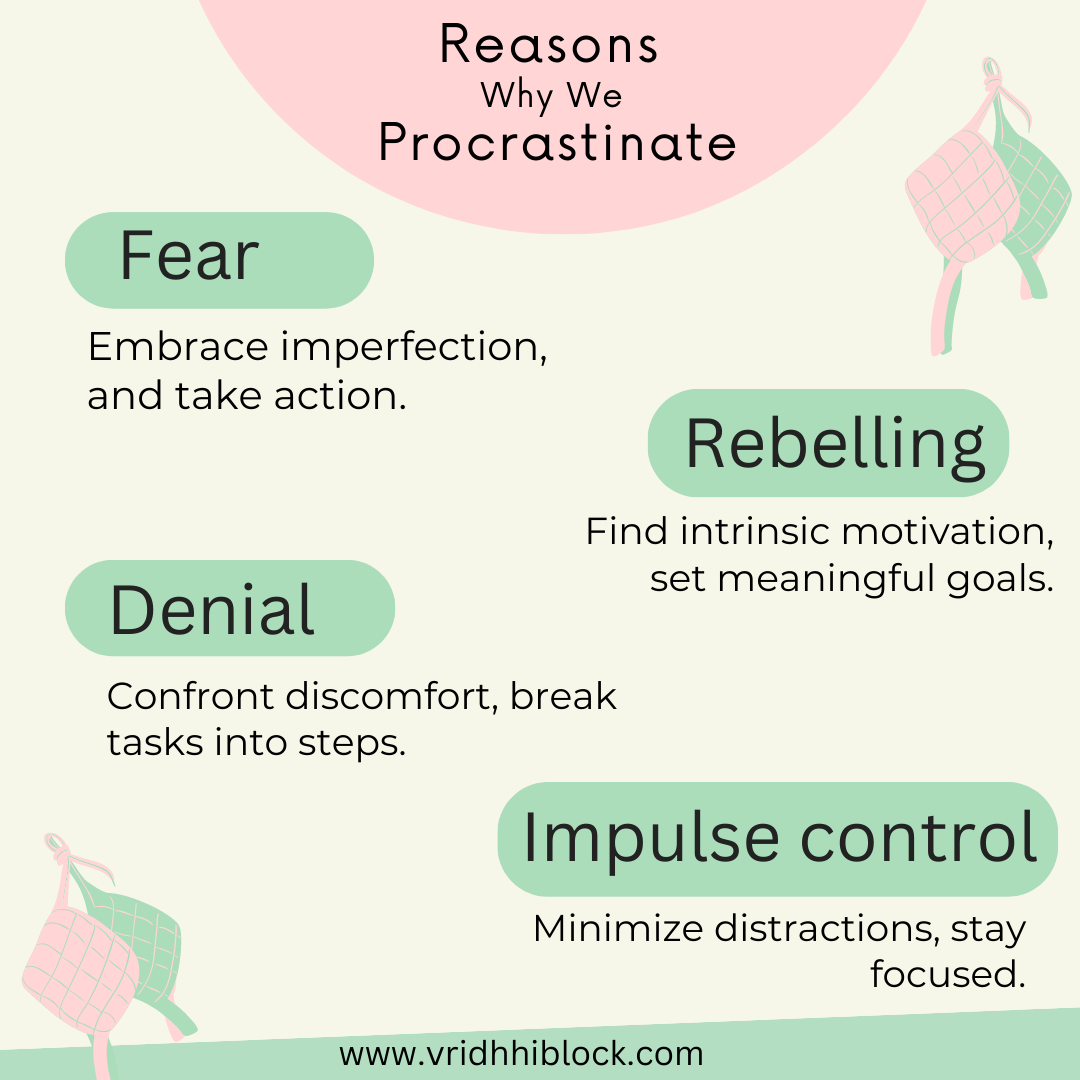
If you’re wondering why you postpone, know that it’s not due to laziness. You did not choose to be a procrastinator! It’s actually because there’s an emotional fight going on within your head, and instead of untangling all of those contradictory feelings, you just ignore what’s giving you worry. According to research by the American Psychological Association, procrastination is deeply tied to emotional regulation and self-control, not lack of willpower.
These are some of the possible reasons for your procrastination.
Effects of Procrastination
By recognizing the effects of procrastination on productivity and mental health, you can take the first step to break free from it. Here are some examples of how procrastination can affect our lives:
- Missed opportunities: Procrastination can cause us to miss out on important opportunities, such as job interviews, academic deadlines, or social events. For instance, imagine you have a job interview scheduled for next week, but you keep putting off preparing for it because you feel overwhelmed or uninterested. As a result, you show up to the interview unprepared and perform poorly, losing the chance to get the job.
- Increased stress: Procrastination can also cause us to feel more stressed and anxious, as we worry about the consequences of delaying tasks.Studies even show it may harm physical and mental health, increasing risks of stress-related illness (Cleveland Clinic). For instance, imagine you have a term paper due in two weeks, but you keep delaying the research and writing process because you don’t feel motivated. As the deadline approaches, you start to panic and feel overwhelmed by the amount of work you have to do, causing you to feel stressed and anxious.
- Reduced productivity: Procrastination can also reduce our productivity and efficiency, as we spend more time and effort on completing tasks at the last minute. For instance, imagine you have a project to complete for work, but you keep delaying the planning and execution because you feel distracted or unmotivated. As the deadline approaches, you have to work long hours and sacrifice sleep and leisure time to complete the project on time, reducing your overall productivity and well-being.
- Impaired mental health: Procrastination can also have negative effects on our mental health, as it can increase feelings of guilt, shame, and self-doubt. For instance, imagine you have been meaning to start a fitness routine for months, but you keep delaying it because you feel too tired or too busy. As time goes by, you start to feel guilty and ashamed for not taking care of your health, leading to negative self-talk and low self-esteem.
These are just some examples of how procrastination can impact our lives. By understanding the negative effects of procrastination, we can motivate ourselves to take action and overcome this harmful habit.
Let’s discuss how to achieve that right away.
How to overcome procrastination
Ta-da! In this section, we’ll provide you with some instances of tactics you may use to Overcome Procrastination
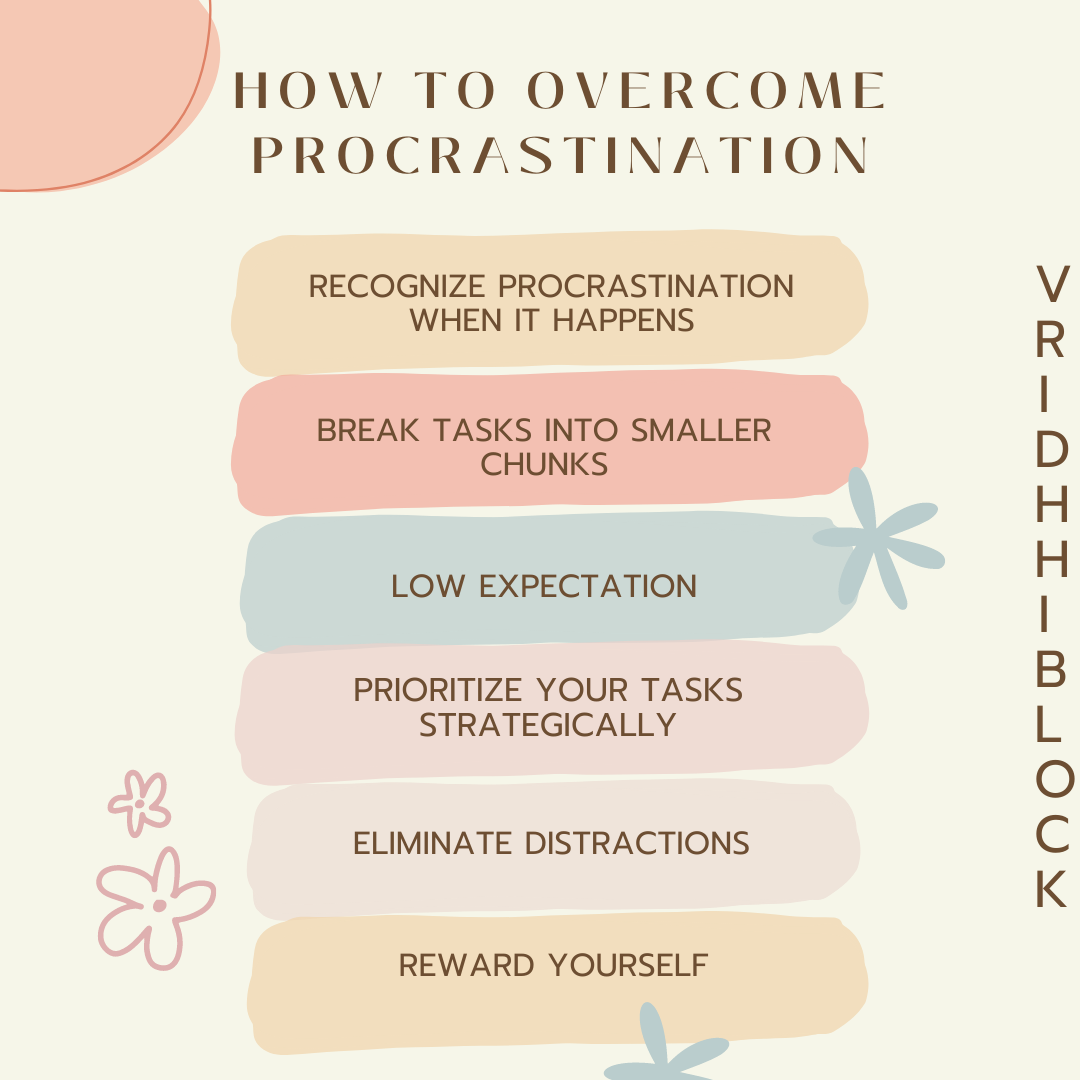
Recognize procrastination when it happens
The initial step towards conquering procrastination is to recognize and acknowledge when it is happening and why it is happening.
It’s important to pay close attention to the thoughts that arise when beginning a task on your to-do list. If you notice yourself thinking phrases like “I’ll do it later” or “I don’t feel like doing this right now,” it’s a clear indication that you’re about to procrastinate. Simply recognizing these tendencies is a significant step towards overcoming them. Recognizing when you’re procrastinating can be a powerful tool in the fight against procrastination.
Break tasks into smaller chunks
It can feel like you’re facing a mountain when work feels large and overwhelming, making it difficult to begin. Do you experience it each time you put off a task?
Be at ease. Try breaking it down into manageable pieces, you can regain control. This aligns with the proven productivity method known as ‘chunking’ or the Pomodoro Technique. Focus your energy on tackling these smaller segments one by one, and watch as progress unfolds across the entire project.
Expectation low/let go of ego
Release the strain of perfectionism and set reasonable standards for yourself. Accept that not every work must be perfect and that errors are a natural part of the learning process. By letting go of ego-driven expectations, you will be able to overcome your fear of failure and make room for development and improvement.
Prioritize your tasks strategically
It’s easy to become overwhelmed when you have a lot of tasks to perform. To avoid this, organize your tasks according to their relevance and urgency. Start with the most important task and work your way down the list. This will allow you to focus your attention on the activities that are most essential to you and avoid spending time on less important tasks.
Eliminate distractions
Distractions are a common cause of procrastination. If you’re easily distracted, try to avoid all physical and digital distractions. Set your phone to “do not disturb,” turn off your device’s notification alert, and avoid viewing Netflix on TV. Simply said, before plugging in and focused, disconnect.
Set a block of time for yourself, say 10 minutes, then sit in a peaceful spot and concentrate on your task. Then take a short break before starting the 10-minute timer again. It will help you avoid disappointment and improve your concentration on your task.
Reward yourself
Finally, reward yourself for your hard work. When you finish a tiny task, take a moment to celebrate your success. This can be as simple as treating yourself to your favorite snack or taking a break to watch an episode of your favorite TV show. By rewarding yourself, you will create a positive association with the task, making it easier to stay motivated and avoid procrastination in the future.
In conclusion, procrastination can be a serious problem, but it is possible to overcome Procrastination, With these strategies in your toolkit, you’re equipped to tackle procrastination head-on and make significant progress towards your goals. Remember, small steps lead to big accomplishments, and by implementing these tactics, With persistence and determination, you can overcome procrastination and achieve success.
Your journey starts with a single, small step. What ONE task will you commit to tackling today? Share it with us in the comments to make it official and hold yourself accountable! You’ve got this.