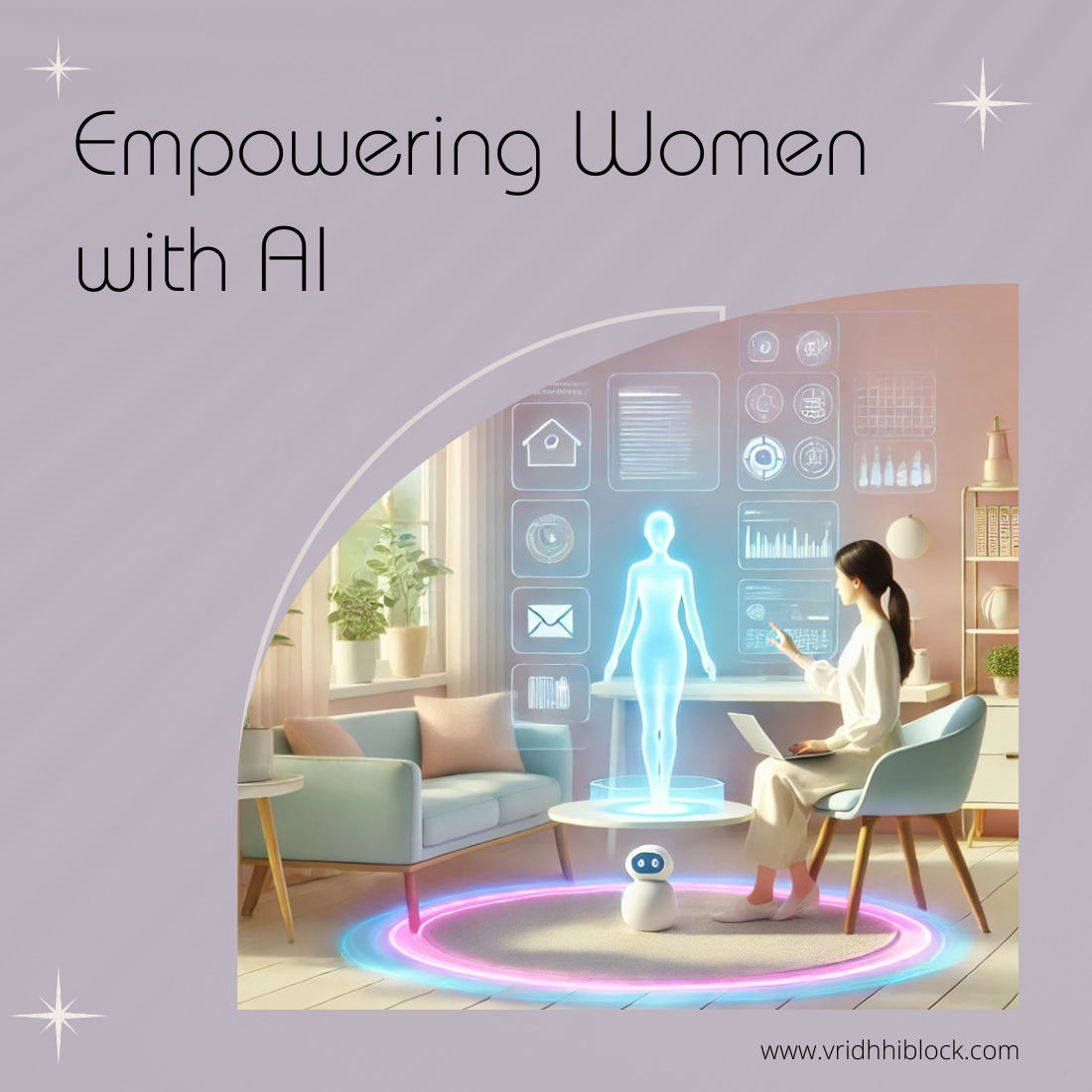

Is change your biggest fear or your greatest opportunity? Discover how to develop a resilient, adaptive mindset—your strongest tool for thriving in a world that never stops changing.
The pace of change today is unlike anything we’ve seen before. Artificial intelligence is transforming industries overnight. Skills that were once “future-proof” are becoming outdated in just a few years. The familiar 9-to-5 routine? It’s quickly giving way to a more fluid, unpredictable global rhythm.
Why It Matters Now
In fact, adaptability has now been ranked among the top 3 future skills by the World Economic Forum—meaning those who learn to flex, learn, and evolve will stay ahead as the world keeps shifting.
No wonder many of us feel anxious. That knot in your stomach when you hear about a new AI tool, or the panic when a colleague mentions a platform you’ve never touched—that’s your fixed mindset whispering, “You can’t keep up.”
But here’s the good news: you can quiet that voice. You can learn to meet change with openness, not fear. The secret isn’t chasing every new trend or tool. The real strength lies in building a foundation that stays strong no matter how the world evolves.
That foundation is called an Adaptive Mindset.
This article kicks off our 5-part series Future-Proof You—your blueprint for building resilience, confidence, and essential skills in a world that keeps shifting. And it all begins with the way you think.
From Fixed → Growth → Adaptive mindset
(Here’s how your mindset evolves into a truly adaptive mindset.)
You may have heard of psychologist Carol Dweck’s groundbreaking work on the Growth Mindset—the belief that talents and abilities aren’t fixed, but can be developed with effort and practice. It changed the way many of us think, shifting our language from “I can’t do this” to “I can’t do this yet.”
An Adaptive Mindset takes this one step further. It’s about being flexible, curious, and resourceful enough to keep learning—especially when the terrain ahead is unpredictable.
Think of it like this: A tall oak tree looks strong but might snap in a storm. A willow bends with the wind, adapts, and survives. That’s the essence of being adaptive.
The Three Pillars of an Adaptive Mindset
Here are three core practices to help you strengthen your adaptability muscle.
1. Cognitive Flexibility: See the Chessboard, Not Just the Pieces
What it means: Being able to shift between perspectives, juggle multiple ideas, and see the bigger picture instead of getting stuck in one way of thinking. This is crucial for overcoming mental blocks and unlocking your creative potential.
In action: You’re willing to pivot when a strategy isn’t working. You can view a challenge through different lenses—technical, emotional, and strategic. You can even hold two opposing truths at once (e.g., “This project might fail, and we’ll still learn something valuable from it.”).
How to build it:
- Challenge assumptions: Regularly ask yourself, “What if I’m wrong?” or “How else could I see this?”
- Seek diverse voices: Talk to people outside your bubble. Read articles or listen to podcasts that challenge your views.
2. Curiosity Over Judgment: Replace “This Won’t Work” with “I Wonder…”
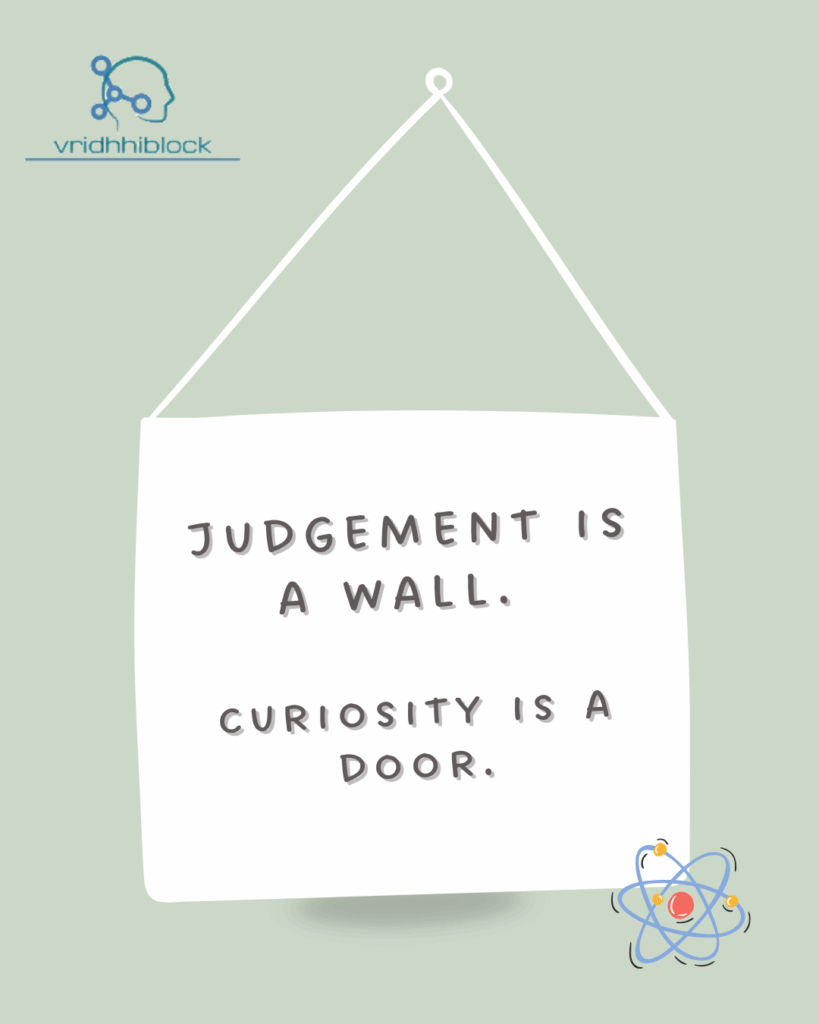
What it means: Instead of dismissing the unfamiliar, you turn toward it with questions and exploration. Judgment builds walls; curiosity opens doors. This is the first step on any transformative journey of self-discovery.
In action: When a new app like ChatGPT makes waves, you don’t roll your eyes. Instead, you ask: “How could this save me time?” or “What are others doing with it?”
How to build it:
- Practice the “Five Whys”: Keep asking “why” until you uncover root causes instead of surface-level complaints. This technique, originating from the Toyota Production System, is powerful for problem-solving.
- Embrace beginner’s mind: Give yourself permission to be bad at something new. Ask questions, experiment, and let go of the pressure to be perfect.
3. Comfort with Ambiguity: Thriving in the “I Don’t Know”
What it means: Accepting that uncertainty is part of the game—and acting anyway. This is the bedrock of emotional resilience and inner strength.
In action: You don’t need a complete plan before starting. You’re okay making decisions with 80% of the information, knowing you can adjust along the way. This is especially valuable when navigating a career transition or any major life change.
How to build it:
- Start small: Try new experiences in low-stakes situations—a new recipe, a different commute, or a fresh tool at work.
- Reframe failure: See outcomes as data, not defeat. “This didn’t work” simply becomes, “Now I know what to try next.” Learn how to overcome negative self-talk that frames ambiguity as a threat.
Your Week 1 Adaptive Mindset Workout
Your Week 1 Adaptive Mindset Challenge.
Knowledge is useless without action. The best way to build these new mental muscles is to practice.
We’ve created this simple workout to get you started. This week, focus on one small task for each pillar:
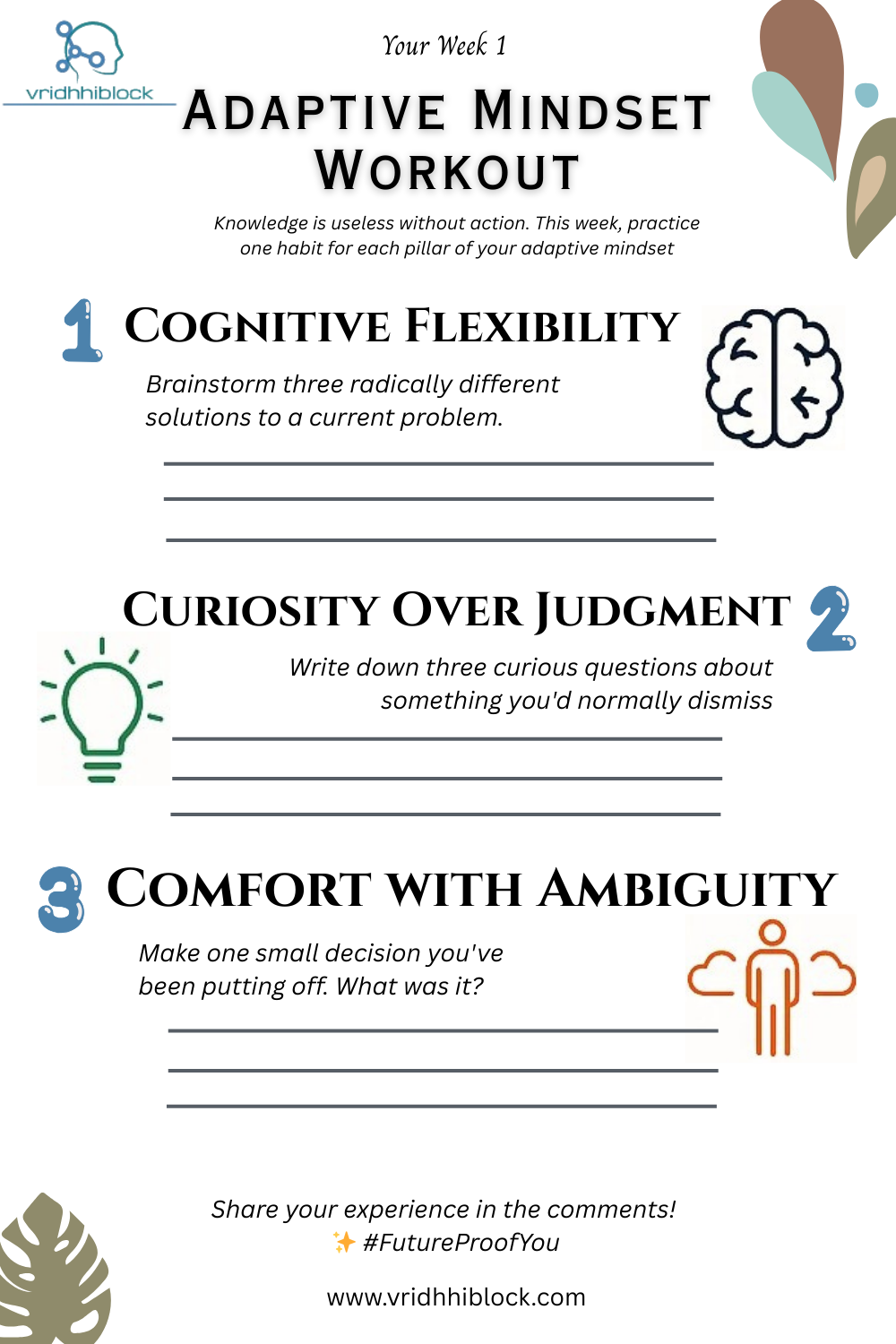
Knowledge sticks best when you put it into action. Here’s a challenge for this week:
- Cognitive Flexibility: For your next problem, brainstorm three very different solutions.
- Curiosity: The next time you’re tempted to dismiss something new, pause and write three curious questions about it.
- Comfort with Ambiguity: Make one small decision today that you’ve been delaying because of uncertainty. Notice how liberating it feels.
Want the printable version?
👉 Download the ‘Week 1 Adaptive Mindset Workout’ PDF to track your progress and get Part 2 first!
Get a stylish, printable PDF of this worksheet to keep on your desk or in your notebook. Plus, get future tips from the Future-Proof You series sent directly to your inbox!
If this guide is helping you build your adaptive mindset, take a moment to save it or share it with someone who’s on their own growth journey. Your small action might inspire someone else to start their Week 1 workout, too.
Conclusion: Your Mindset is Your Basecamp
An adaptive mindset isn’t a final destination—it’s a daily practice. Think of it as your basecamp: the solid ground from which you’ll climb every new mountain the future throws your way. With this mindset, you’re not just preparing to learn new skills—you’re preparing to learn how to learn any skill.
This is your foundation for everything that comes next.
👉 In Part 2, we’ll move from mindset to action and explore Digital Literacy 2.0: The Essential Tech Skills Everyone Needs Now. You’ll see how to turn modern tools from intimidating to empowering, a key step in mastering digital minimalism and intentional living.
Question for you: What’s one area of your life where you notice a fixed mindset creeping in? Share it in the comments—naming it is the first step toward shifting it.