
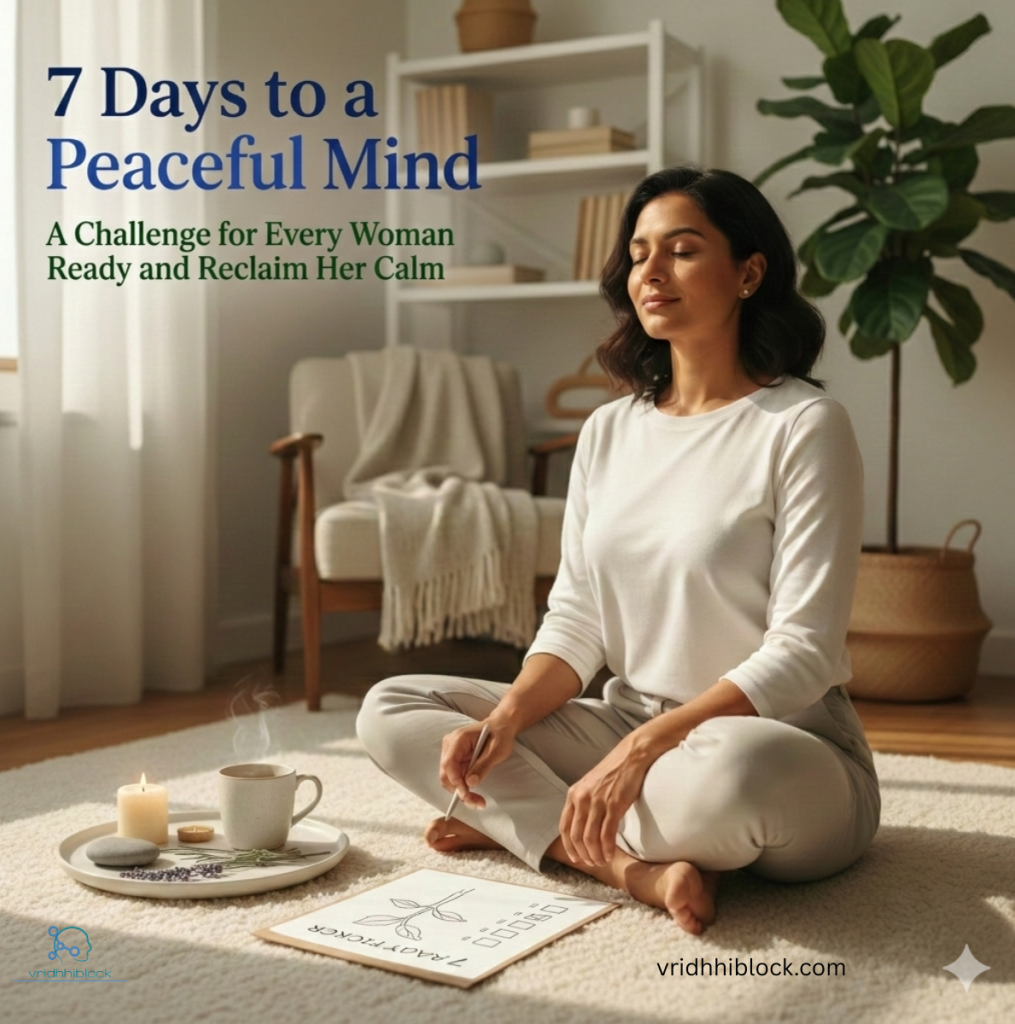
Welcome to your 7-day peaceful mindset challenge designed for women who want emotional clarity, inner strength, and freedom from overwhelm. Discover how emotional minimalism can transform your life.
A Gentle Reset for the Modern Woman
What if peace wasn’t something you had to earn — but something you could build?
Think about that for a moment.
For so long, we’ve been conditioned to believe that peace is a reward. Finish everything on your to-do list, then you can rest. Solve everyone else’s problems, then you can breathe. Meet every expectation, then you can relax.
But the to-do list never ends. The problems keep coming. The expectations keep rising.
So peace keeps getting pushed to “someday.” And someday never arrives.
As a woman in today’s world, you’re constantly navigating competing demands. Be productive at work. Be present at home. Be nurturing to friends. Be ambitious in your goals. Be emotionally available for everyone who needs you. Be strong — but not so strong that you seem cold. Care deeply — but don’t be too emotional about it.
It’s exhausting. And it’s no way to live.
International Women’s Day often celebrates achievements, milestones, and empowerment. And those things matter. They do.
But this year, let’s celebrate something quieter. Something just as powerful, though it doesn’t make headlines.
Let’s celebrate your Peaceful Mindset.
Because true strength isn’t about doing more. It’s about carrying less. It’s about knowing what deserves your energy and what you can finally, gently put down.
This 7-day challenge isn’t about productivity hacks or self-optimization. It’s not about becoming a “better” version of yourself as if who you are right now isn’t enough.
It’s about emotional minimalism — clearing the internal clutter so you can move through life with clarity, intention, and genuine calm.
If you’re tired of feeling overwhelmed. If you’re ready to feel emotionally stronger, lighter, and more centered. If you suspect that peace isn’t something you have to chase but something you can cultivate right where you are.
This reset is for you.
The 7-Day Challenge at a Glance:
| Day | Focus | Time Needed |
|---|---|---|
| Day 1 | Emotional Audit | 10 mins |
| Day 2 | Digital Boundaries | 5 mins |
| Day 3 | The Power of Pause | 5 mins |
| Day 4 | Clean Boundaries | 5 mins |
| Day 5 | Clear Physical Space | 10 mins |
| Day 6 | Release Emotional Attachment | 10 mins |
| Day 7 | Define Your Peace Standard | 15 mins |
Why a Peaceful Mindset for Women Matters Today
Before we begin the challenge, let’s name what we’re dealing with.
Because here’s the truth: Women carry invisible weight.
Not the physical kind you can see. The emotional kind that accumulates slowly, silently, until one day you realize you’re exhausted and you can’t quite explain why.
This weight includes:
- Managing family emotions: Tracking who’s upset, who needs support, who isn’t speaking to whom. Smoothing tensions. Keeping the peace for everyone else — often at the expense of your own.
- Handling workplace pressure: Proving yourself again and again. Navigating office politics. Suppressing frustration so you don’t seem “difficult.” Carrying the mental load of projects while also managing relationships.
- Navigating social comparison: Scrolling through perfectly curated lives and feeling, despite knowing better, that somehow you’re falling behind. Her engagement. Her promotion. Her vacation. Her seemingly effortless everything.
- Absorbing global news and digital noise: The 24-hour news cycle. The tragedies you can’t stop thinking about. The opinions you didn’t ask for. The outrage du jour that demands your attention. Learning about digital detox can help you manage this overload.
All of this takes up space in your inner world. And when that space is too full, every small stress feels like a crisis.
A peaceful mindset doesn’t mean avoiding responsibility or disconnecting from the world. It means engaging with life without being emotionally overwhelmed by it.
It means having enough internal space to feel what matters without drowning in everything else. This is where emotional resilience becomes essential.
This is where emotional minimalism comes in.
Emotional minimalism is the practice of choosing which emotions deserve your energy and releasing the rest. It’s not about becoming numb or detached. It’s about being intentional.
It teaches you to ask:
- Is this emotion helping me grow — or is it just draining me?
- Is this mine to carry — or did I absorb it from someone else?
- Does this deserve space in my inner room — or is it time to let it go?
These questions are powerful. And over the next seven days, you’ll learn to ask them regularly. For deeper support, explore these stress management techniques.
Now, let’s begin.
Day 1: Audit Your Emotional Clutter
You can’t clear what you can’t see.
This is the most important truth of emotional minimalism. We spend so much time managing our external spaces — cleaning our homes, organizing our closets, decluttering our kitchens. But how often do we look at what’s taking up space inside us?
Today, you’ll do exactly that.
Today’s Focus: Awareness
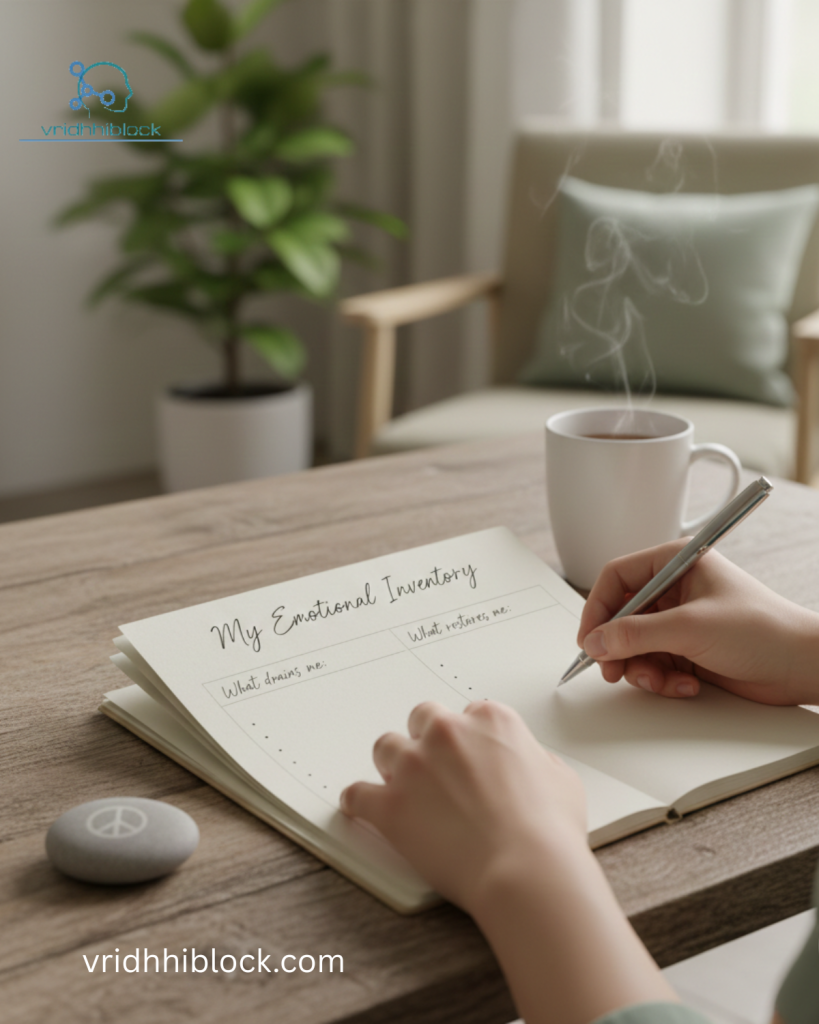
Find a quiet moment. Take out a notebook or open a blank document on your phone. Write down whatever comes up when you ask yourself these questions:
- What has emotionally drained me this week?
- Which conversations are still lingering in my mind?
- Where am I overextending emotionally?
- What worries keep circling back, even when I try to push them away?
- Whose problems am I carrying that aren’t really mine?
- What expectations (mine or others’) am I exhausting myself trying to meet?
Don’t judge what shows up. Don’t try to fix anything. Don’t tell yourself you shouldn’t feel this way or carry that thing.
Just write. Let it all out. This practice of self-reflection is the foundation of emotional clarity.
This is your emotional inventory. And like any inventory, its purpose is simply to show you what you’re working with.
Mini Practice for Tonight:
Before bed, take three deep breaths. Slow, intentional breaths. As you exhale the third one, mentally choose one small thing from your inventory to release. Just for tonight. Just for this moment.
Say to yourself (silently or aloud):
“I don’t need to carry this right now. I can pick it up again tomorrow if I need to. But for tonight, I’m putting it down.”
Notice how that feels. Notice the tiny space it creates. You might also find journaling helpful for this practice.
This is your first step toward emotional minimalism.
Day 2: Create a Digital Boundary
Much of today’s emotional overload begins with a screen.
Think about it. When was the last time you felt genuinely peaceful after 30 minutes of scrolling? When was the last time social media left you feeling fuller, not emptier?
For most of us, the digital world is where emotional clutter accumulates fastest.
Scrolling through social platforms often triggers:
- Comparison: Her life looks so put together. What am I doing wrong?
- Anger: That post is infuriating. How dare they?
- Envy: She got the opportunity I wanted. Why not me?
- Anxiety: Another crisis. Another thing to worry about. Another problem I can’t solve.
And here’s the thing — most of this, you never asked for. It just shows up, uninvited, taking up space in your inner room. Practicing digital minimalism can help you take back control.
Today’s Focus: Protection
You wouldn’t leave your front door open for anyone to walk in and say anything they wanted. So why leave your mind open to whatever the algorithm decides to throw at you?
Today, you’re going to create one digital boundary. Just one. Pick whichever feels right for you:
- Turn off all non-essential notifications. (Yes, all of them. The news alerts, the app reminders, the “someone liked your post” pings. They can wait.)
- Unfollow three accounts that consistently leave you feeling drained, insecure, or angry. You don’t need to announce it. You don’t need to make a statement. Just quietly remove them from your feed.
- Set a 30-minute limit for social scrolling. Use your phone’s screen time settings or just a timer. When it goes off, close the app.
- Create a “no phone” zone — maybe your bedroom, maybe the dinner table, maybe the first 30 minutes after waking. One small space where your mind is yours. Learn more about managing screen time effectively.
Remember this: A woman building a peaceful mindset protects her attention like the precious resource it is. Not every headline requires your emotional response. Not every opinion deserves space in your head. Digital wellness is essential for inner peace.
You get to choose what enters. Practice choosing today.

Day 3: Practice the Power of Pause
Here’s something emotional minimalism teaches: Strength isn’t about suppressing feelings. It’s about managing reactions.
Feelings will arise. That’s not the problem. The problem is when we react immediately — firing off that angry message, saying something we regret, making a decision from a place of overwhelm — and then have to deal with the consequences.
Between a trigger and your response, there’s a tiny window. A pause. Most of us forget it exists. Today, you’ll practice finding it. Mindfulness is the key to mastering this pause.
Today’s Focus: Response Over Reaction
When something triggers you today — an email that frustrates you, a comment that stings, a situation that feels unfair — do this:
- Pause. Stop whatever you’re doing. Don’t respond yet.
- Take one slow breath. In through your nose. Out through your mouth. Feel the air move.
- Ask yourself: Is reacting right now necessary? What would happen if I waited 10 minutes? An hour? Until tomorrow?
That’s it. That’s the whole practice.
You’re not suppressing how you feel. You’re just creating enough space to choose your response rather than being controlled by your reaction. This is one of the most effective stress management techniques available.
Why this matters:
Most things that feel urgent in the moment aren’t actually urgent. Most things that trigger an immediate emotional response don’t need one.
The pause lets your thinking brain catch up to your feeling brain. And from that place, clarity lives.
Emotional minimalism doesn’t eliminate emotion — it eliminates unnecessary escalation. The feeling still comes. You just don’t let it take over the whole room.
Day 4: Release the Need to Over-Explain
If there’s one thing women are socialized to do, it’s this: explain ourselves.
Think about how often you preface requests with apologies. How often you justify your boundaries with long-winded reasons. How often you soften your “no” until it barely sounds like a no at all.
“I’m so sorry, I’d really love to, but I just have so much going on right now, and I feel terrible, but I just can’t, I hope you understand…”
Exhausting. For you and for the person listening. This pattern often stems from negative self-talk that tells us we need to justify our existence.
Today’s Focus: Clean Boundaries
Today, you’ll practice communicating directly. No over-apologizing. No long explanations. No making yourself small so someone else can feel comfortable.
Try these phrases:
- “I won’t be able to do that.”
- “That doesn’t work for me.”
- “I need some time to myself.”
- “No, thank you.”
- “I’m not available.”
Notice what these sentences have in common. They’re complete. They don’t beg for understanding. They don’t negotiate. They simply state. This is about building positive habits around communication.
What to expect:
This might feel uncomfortable at first. You might worry that you seem rude or cold. You might feel the urge to add a “sorry” or a long justification.
That’s normal. You’re unlearning something deeply ingrained.
But here’s what you’ll also notice: people adjust. Most don’t need your explanations. And the ones who push back? That tells you something important about them.
A Peaceful Mindset grows when guilt shrinks When you stop apologizing for having needs, for taking up space, for protecting your energy. You’re allowed to exist without explaining yourself.
Practice that today.
Day 5: Declutter One Physical Space
Your external environment mirrors your internal state.
Have you ever noticed how hard it is to feel calm in a cluttered room? How a messy desk makes your thoughts feel messy too? How chaos around you seems to create chaos inside you?
That’s not coincidence. Your physical space and your mental space are constantly talking to each other. That’s why home organization is so powerful for mental clarity.
When your inner world feels crowded, your outer world often reflects that — piles of paper, overflowing closets, surfaces covered with things you don’t need.
And when your outer world is chaotic, your inner world follows.
Today’s Focus: Clear One Corner
You don’t need to declutter your entire home. That’s overwhelming and not the point. Today, just choose one small space:
- Your desk. Clear the surface. Keep only what you actually use.
- Your bedside table. Remove the clutter. Add something calming — a candle, a small plant, a photo that makes you smile.
- One drawer. The junk drawer. The catch-all. Spend 10 minutes sorting and tossing.
- A corner of your living space. Create a small “peace zone” — just a spot that feels calm when you look at it.
That’s it. One small space.
Notice what happens:
When your surroundings feel lighter, your mind follows. Not completely, not permanently. But there’s a shift. A little more room to breathe.
Emotional minimalism is often supported by physical simplicity. When you clear space around you, you remind yourself that space inside you is possible too.

Day 6: Let Go of One Emotional Attachment
This is deeper work. Take your time with it.
We all have things we carry that aren’t physical. Old arguments we replay in our heads. Comparisons that won’t let go. Resentments we’ve been nurturing for years. Stories about ourselves that stopped being true long ago.
These emotional attachments take up so much space. And unlike physical clutter, we can’t just throw them in a box and donate them.
But we can choose to let them go. Not all at once. One at a time. You don’t need to declutter your entire home
Today’s Focus: Conscious Release
Sit quietly for a few minutes. Ask yourself:
- Is there a past argument I keep replaying?
- Is there a comparison I can’t seem to shake?
- Is there a resentment I’m still holding onto?
- Is there a story about myself that no longer fits but I keep telling anyway?
Choose one. Just one. This might be one of those negative habits that’s been holding you back
Now, do something with it.
You might:
- Write it on a piece of paper, then tear it up and throw it away.
- Say aloud: “I no longer need to carry this.”
- Imagine placing it in a balloon and watching it float away.
- Write a letter you’ll never send, expressing everything, then safely destroy it.
This isn’t about pretending the thing never happened or didn’t matter. It’s about choosing not to let it keep living in you, taking up space, rent-free.
A woman who practices emotional minimalism understands: Not every memory deserves permanent residency. Some things visited. Some things taught you something. And now, they can go.
Day 7: Define Your Peace Standard
This is integration day. You’ve done the work. Now it’s time to make it sustainable.
A Peaceful Mindset isn’t something you achieve and then forget about. It’s something you maintain — through awareness, through boundaries, through daily choices.
Today, you’ll create a simple framework for yourself going forward. Think of it as goal setting for your emotional well-being.
Today’s Focus: Your Peace Standard
Ask yourself these questions and write down your answers:
- What does a Peaceful Mindset look like in my daily life? Not in theory. In practice. What does it feel like? What does it make possible?
- What consistently drains my emotional energy? Be honest. People? Situations? Habits? Digital spaces?
- What consistently restores me? What activities, people, or spaces leave you feeling fuller, not emptier?
- What are my non-negotiables? These are your boundaries. The things you commit to protecting, no matter what.
Here are some examples of non-negotiables:
- No phone for the first 30 minutes after waking.
- One hour alone each week — no obligations, no people, just me.
- No engaging in gossip or conversations that tear others down.
- Leaving social situations when I feel drained, without guilt.
- Saying no to at least one thing each week that doesn’t serve me.
Write your own. Three to five non-negotiables that feel true for you. This is how you create lasting growth mindset around peace.
Peace becomes sustainable when it becomes intentional. When you stop hoping for calm and start designing your life around it.
The Long-Term Benefits of Emotional Minimalism and a Peaceful Mindset
When practiced consistently, the principles in this challenge lead to lasting change:
✔ Stronger Relationships
You respond thoughtfully instead of reacting emotionally. You show up present rather than overwhelmed. You can support others without losing yourself. Learning finding balance helps in all relationships.
✔ Increased Confidence
You trust your boundaries. You stop second-guessing your needs. You know what’s yours to carry and what isn’t.
✔ Reduced Anxiety
Less emotional clutter means fewer mental spirals. Fewer loops of worry. Fewer nights lying awake replaying conversations.
✔ Greater Focus
You stop scattering your energy across unnecessary drama. You have more attention for what actually matters — your work, your loved ones, your own growth.
✔ More Capacity for Joy
Here’s what people don’t tell you: when you clear out the emotional clutter, you make room for more than just peace. You make room for joy. For presence. For the good feelings that were always there but couldn’t get through all the noise.
A Peaceful Mindset doesn’t remove life’s challenges. It changes how you meet them. From a place of clarity rather than chaos. From strength rather than overwhelm.
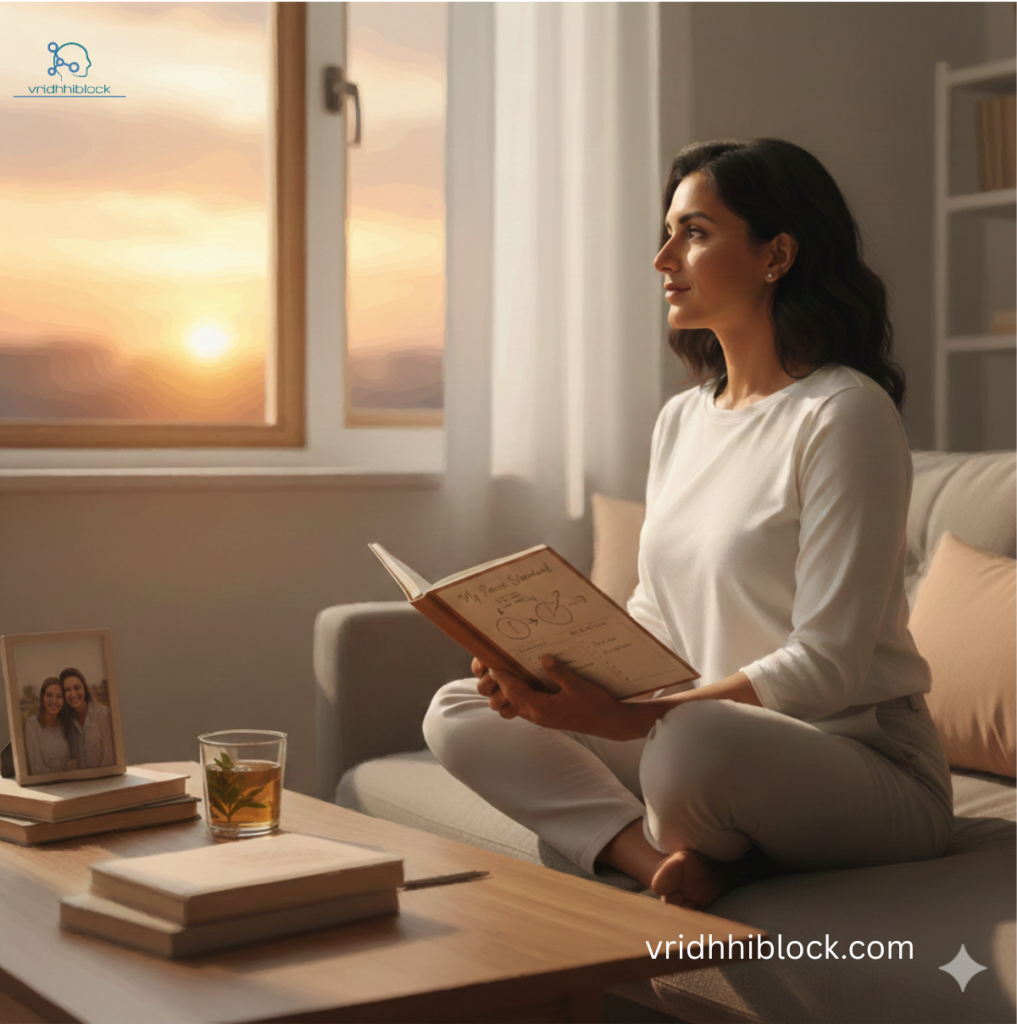
Conclusion: Your Peace Is Not a Luxury
Let this sink in:
You do not have to earn rest.
You do not have to justify your boundaries.
You do not have to emotionally engage with everything that comes your way.
Peace is not a reward for finishing everything. It’s not something you get to after everyone else is taken care of. It’s not a luxury reserved for women with less demanding lives.
Peace is something you choose. Daily. Moment by moment.
A Peaceful Mindset is built one small decision at a time:
- The pause before reacting
- The boundary you don’t explain
- The digital space you protect
- The emotional attachment you release
- The physical corner you clear
- The non-negotiable you honor
This 7-day challenge is just the beginning. A doorway. A reminder that peace is possible, even in a loud and demanding world. Every day is an opportunity for new beginnings.
What now?
If this resonated with you, here are three ways to continue:
- Share this challenge with another woman who needs a reset. Text her the link. Tell her you’re practicing together. Hold each other accountable.
- Repeat the challenge next month. Go through the seven days again. Notice what’s different. Notice what’s harder. Notice what’s easier.
- Explore deeper practices of emotional minimalism and mindful living. Subscribe to continue this journey.
Because when one woman chooses clarity over chaos, she doesn’t just transform her own life. She models strength for everyone around her. She shows what’s possible. She makes it a little easier for the next woman to choose peace too.
You Might Also Like:
- The Peaceful Mindset: 11 Steps to Cultivate Inner Peace
- Emotional Resilience: Building Inner Strength
- Digital Minimalism: Simplifying Your Digital Life
- Practicing Gratitude: Cultivating a Positive Mindset
- Stress Management Techniques: Mastering Inner Calm
Are You Ready to Begin?
🌿 Start today.
Pick one day from this challenge. Just one. Do the practice. Notice how it feels.
Not because you have to be perfect. Not because you need to fix yourself.
Because you deserve to move through life with a little more space. A little more clarity. A little more calm.
And because peace — real, sustainable, internal peace — isn’t something you find someday.
It’s something you build. Right here. Right now. One small choice at a time.
Which day of the challenge spoke to you most? Drop a comment below. And if you know a woman who needs this reset, share it with her. She might need to hear it today.