
Master the art of building positive habits that last. This guide reveals the science-backed steps to replace willpower with consistency and finally achieve your goals. Start your journey to a flourishing life.
What if you could achieve your goals almost automatically, without constant effort and willpower? The secret lies not in superhuman discipline, but in building positive habits and breaking the negative ones that hold you back.. This isn’t just about what you do, but how you systemize your life for success. Let’s explore how you can transform your aspirations into automatic actions and truly flourish
Most of us assume that people who consistently fit in workouts, eat healthily, perform well on tests, and pick up their kids on time must possess superhuman willpower. However, research shows that what we perceive as extraordinary self-control is often the result of well-built habits.
Our habits shape our attitudes, behaviours, decision-making, and in fact, every aspect of our lives. They determine whether we feel energetic or drained, healthy or unhealthy, happy or unhappy. Indeed, habits wield tremendous power.
But first, we must comprehend what habits are and how they develop before we can create positive ones. We also need to be aware of the errors we make during the procedure.
Let’s examine the science of good habits, the art of developing them, and how you may prepare yourself to create new, better habits right now effectively.
“A habit is a behaviour pattern that is routinely practised and frequently happens unconsciously.”
Why Habits Are The True Key to Success
Your life and personality are shaped by habits. They therefore directly affect your achievement in the future. Daily actions should be carried out because most goals require a lot of commitment to be successful.
“Habit – Key to Success”
Regularly monitoring your actions and thinking about them might be difficult. Here habits become important. By forming a habit you can rely on, you can remove a lot of the uncertainty and put yourself on the path to success.
Okay, now having established the significance of habits, it is time to move on to the steps to creating a new habit for yourself.
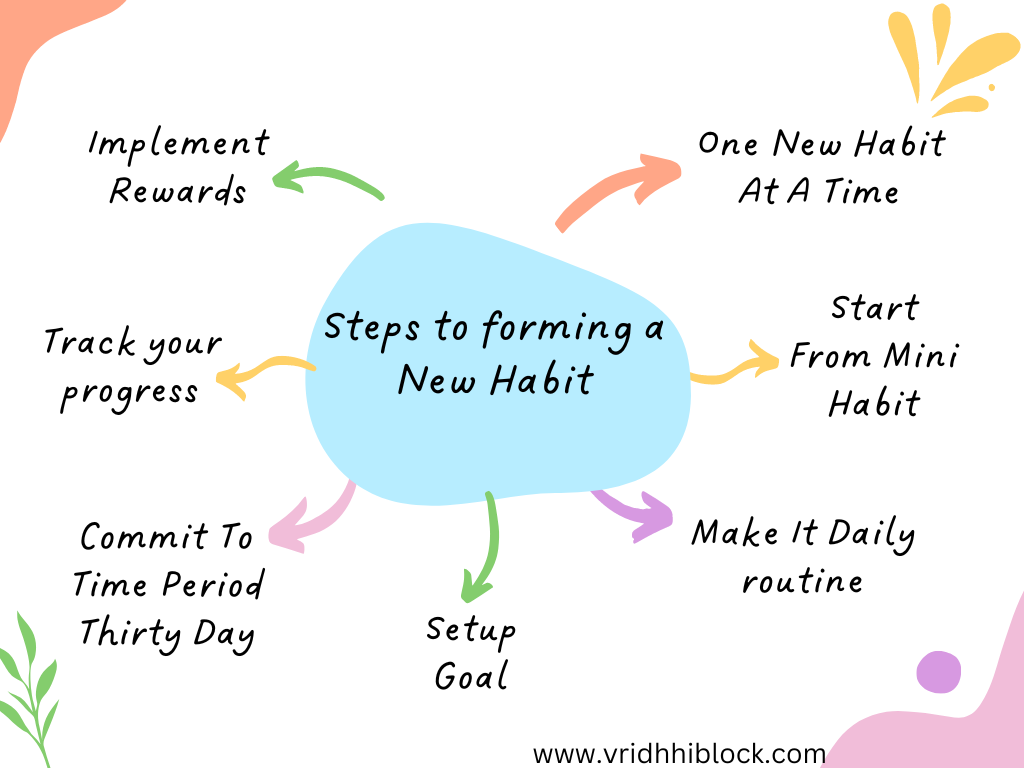
The 7 Steps to Building Positive Habits
You may start creating a healthy lifestyle and learn to manage your desires by learning how to create new habits and get rid of negative ones.
Consider the following tips for creating good habits:
For a deeper dive into building small yet powerful routines, James Clear’s Atomic Habits summary offers practical strategies backed by science.
1. Introduce One New Habit at a Time
Trying to change everything at once is a recipe for burnout and failure. This is especially true if you’re also battling a list of negative habits that drain your energy.Focus your energy on integrating a single habit into your routine until it becomes second nature. Only then should you begin to add another.
- Example: Instead of overhauling your diet and starting a rigorous workout plan simultaneously, master healthy eating first. Once that feels automatic, you can channel your focus into consistent exercise.
2. Begin with a Mini-Habit
The key to consistency is making the initial action so small it’s impossible to fail. This eliminates the need for motivation and builds momentum by ensuring daily success.
- Example: Don’t commit to a one-hour gym session. Start by putting on your workout shoes and doing just 10 minutes of exercise. A tiny win is better than no win.
3. Make It a Daily Routine
Consistency is what wires your brain for a new habit. Anchor your new behavior to a specific time and place in your day to make it a non-negotiable part of your life.
- Example: If you want to write more, don’t wait for inspiration. Commit to writing every morning with your coffee, even if it’s just five sentences.
4. Set a Clear Goal
Define what success looks like. Knowing the “why” behind your habit and outlining the specific behaviors you want to change (or adopt) provides direction and motivation.
- Pro Tip: Write your goal down and place reminders—like a post-it note on your mirror or a notification on your phone—to keep it top of mind.
5. Commit to a 30-Day Period
While habit formation timelines can vary, a 30-day commitment provides a clear and manageable framework. This period helps you push through the initial challenging phase until the habit begins to feel more automatic.
6. Track Your Progress
What gets measured gets managed. Monitoring your progress provides a powerful visual proof of your commitment, helps you stay accountable, and allows you to celebrate small victories along the way.
- How to do it: Use a habit tracker app, a journal, or a simple calendar where you can mark an “X” for each day you successfully complete your habit.
7. Implement a Reward System
Make habit-building enjoyable by linking your effort to a positive outcome. Rewarding yourself reinforces the behavior and trains your brain to associate the habit with pleasure.
- Reward Ideas: After a week of consistency, enjoy a relaxing bath, watch a movie, or indulge in your favorite healthy treat. Choose a reward that motivates you.
By following these steps, you shift from relying on fleeting willpower to leveraging a proven system for change. Remember, the goal is progress, not perfection. Start with one step today.
How to Stay Consistent & Make It Stick
After learning how to create excellent habits, let’s look at some advice for maintaining your new behaviour.
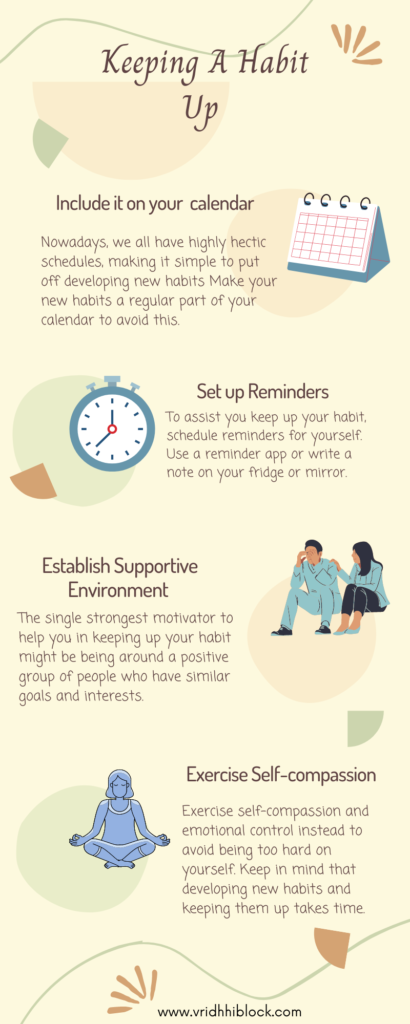
Infographic Transcript: How to Maintain Your New Habits
Title: Keeping A Habit Up
1. Include It On Your Calendar
- Description: Nowadays, we all have highly hectic schedules, making it simple to put off developing new habits. Make your new habits a regular part of your calendar to avoid this.
2. Set Up Reminders
- Description: To help you keep up your habit, schedule reminders for yourself. Use a reminder app or write a note on your fridge or mirror.
3. Establish A Supportive Environment
- Description: The single strongest motivator to help you in keeping up your habit might be being around a positive group of people who have similar goals and interests.
4. Exercise Self-Compassion
- Description: Exercise self-compassion and emotional control instead of being too hard on yourself. Keep in mind that developing new habits and keeping them up takes time.
Website: www.vridhhiblock.com
Begin forming that new habit today.
Now that you have the steps to build a new habit, it’s your turn. Choose one behaviour and commit to practicing it daily for the next 30 days using the method outlined above.
What’s the one positive habit you’re most excited to build? Share your commitment in the comments below to make it official! 👇